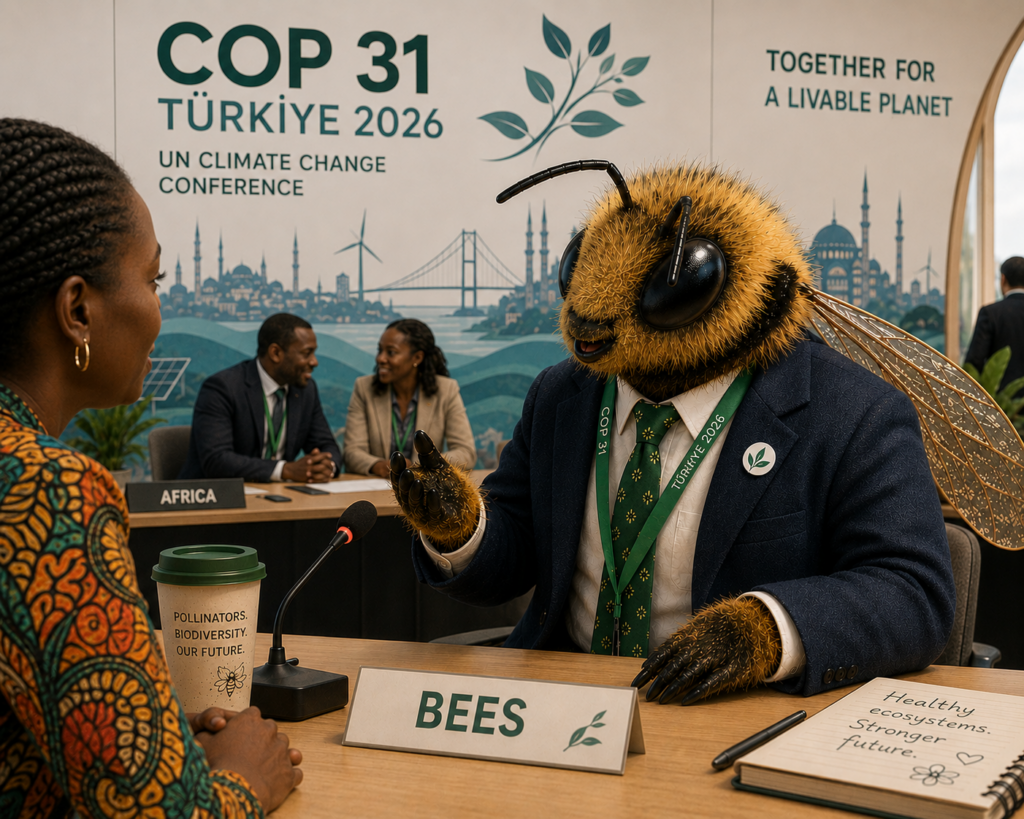
Every year, world leaders, scientists, innovators, and climate experts gather at global summits like COP to tackle one of humanity’s biggest challenges: climate change. These meetings matter. They shape policy, unlock funding, drive innovation, and create the frameworks needed for coordinated global action. Progress on climate depends on these conversations
But if we are being honest, there is one major climate expert we keep forgetting to invite.
The bee.
Behind the simplicity is serious science.
According to the Food and Agriculture Organization, pollinators are responsible for helping reproduce nearly 75 percent of the world’s flowering plants, while close to 35 percent of global food crop production depends on pollinators. That means roughly one in every three bites of food we eat exists because pollinators showed up to work.
Coffee, apples, avocados, mangoes, cucumbers, watermelon, sunflower crops, and even livestock feed production all benefit from pollination.
This is not a small ecological side note, this is global infrastructure.
But the real story goes beyond what ends up on our plates.
Bees play a central role in maintaining healthy ecosystems by enabling plant reproduction and genetic diversity. Healthy ecosystems are one of our strongest natural defenses against climate change because they absorb carbon, protect soils from degradation, regulate water cycles, support biodiversity, and recover faster from droughts and environmental shocks. Scientists estimate that more than 87 percent of wild flowering plant species depend on animal pollination.
That means bees are not simply helping nature look beautiful, they are helping natural systems stay functional and resilient in the face of a changing climate.
This matters even more now because those same pollinators are under growing pressure. Habitat loss, pesticide misuse, pests, disease, and rising temperatures are all contributing to pollinator decline globally. In some regions, studies suggest nearly 40 percent of invertebrate pollinator species face significant risk of decline or extinction.
Climate change adds another layer of disruption by shifting flowering seasons and rainfall patterns. Flowers bloom earlier. Temperatures rise faster. Seasonal rhythms become less predictable. Bees often emerge expecting nectar sources that have already passed their peak.
In ecological terms, this mismatch weakens colonies and reduces pollination success. In simpler terms, nature’s schedule gets scrambled.
And when bees struggle, ecosystems become less stable. Food systems become less secure. Climate resilience weakens. This is why protecting bees is not simply about conservation. It is about strategy.
And this is where Kenya has a remarkable opportunity.
Beekeeping is one of the most practical climate solutions available because it delivers environmental and economic benefits at the same time. It improves crop yields through pollination, creates income through hive products, supports biodiversity, and encourages communities to conserve forests and natural landscapes.
A healthy hive can pollinate millions of flowers in a single season. Multiply that across landscapes, farms, and conservation areas, and what you have is not just honey production.
It is climate resilience in action.
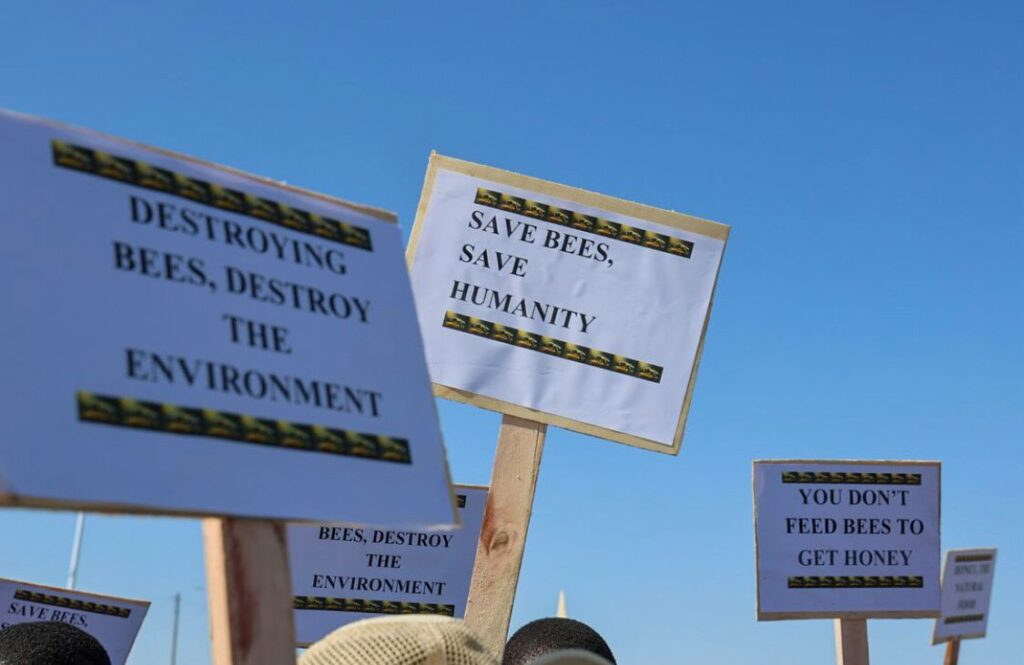
This is exactly why World Bee Day matters.
Observed globally every 20th May, World Bee Day reminds us that the partnership between people and pollinators is essential to both environmental sustainability and food security.
The 2026 celebrations will take place at Mama Ngina Waterfront in Mombasa under the theme “Bee Together for People and the Planet: A Partnership That Sustains Us All.”
Among the hosting partners will be SMACHS Foundation, leading the Youth and Children in Beekeeping Corner, an interactive platform where young people will engage through practical learning, live demonstrations, creative competitions, and direct exposure to how apiculture strengthens both livelihoods and environmental stewardship.
Perhaps bees do not need a formal invitation to COP31. They have already been doing the work.
But their lesson is one worth carrying into every climate conversation: sometimes the most powerful solutions are not always the loudest or the largest. Sometimes, they are already quietly at work all around us, reminding us that resilience is built through connection, balance, and steady effort.
Sometimes, it hums.