In communications class, they tell you that a good orator should explain a concept as if they are explaining it to their eighty year old grandmother. Clear. Simple.
This is already difficult for me because I am neither a great orator, nor is my grandmother a particularly good listener.
But let us try anyway.
For generations, farming in Kenya followed a rhythm. Seasons were not perfect, but they were familiar. Rains arrived within a known window. Planting followed memory. Harvests followed patience. Knowledge moved quietly from one generation to the next, not through manuals or training sessions, but through observation, repetition, and trust in the land.
It was so predictable that our grandparents used to measure time in seasons. The land itself was the clock.
That certainty no longer exists.
Today, rains delay, disappear, or arrive all at once. Dry spells last longer. Floods destroy more. Pests and crop diseases adapt faster than farmers can respond. Decisions that were once guided by experience are now shaped by uncertainty, and effort no longer guarantees yield.
This unpredictability does not stay on the farm. According to the Food and Agriculture Organization, climate variability and extreme weather events are now among the leading contributors to food insecurity across Africa. Failed seasons translate directly into food shortages, rising prices, lost incomes, and increased vulnerability for millions of households.
Climate Smart Agriculture responds to this reality directly.
It refers to farming approaches that increase productivity, strengthen resilience to climate shocks, and reduce environmental degradation under changing climatic conditions. In practice, this means farming systems that conserve water, protect soil, diversify production, and reduce exposure to risk. It is about adjusting how food is produced so that agriculture remains viable even when weather patterns are no longer predictable.
In Kenya, this matters because agriculture remains central to livelihoods and food security, yet is heavily dependent on rainfall. As climate conditions become more erratic, continuing to farm the same way is no longer neutral. It is risky.
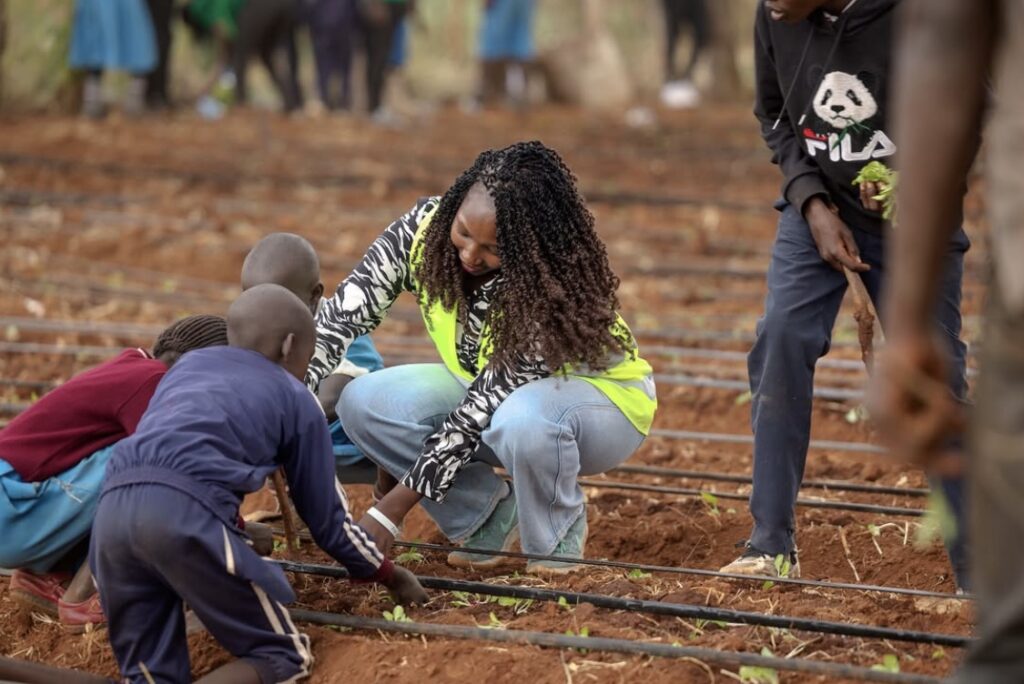
At SMACHS Foundation, this reality has been experienced firsthand. Some of our model farms have been damaged by prolonged dry periods followed by sudden and destructive rainfall. Crops have failed. Infrastructure has been lost. Seasons that were carefully planned have been wiped out. Like many farmers across the country, we have had to learn quickly, adapt continuously, and adopt climate smart practices simply to continue farming.
This has involved rethinking water use, strengthening soil management, diversifying crops, and building systems that can absorb shocks rather than collapse under them. These adjustments are not theoretical. They are responses to lived experience.
For young people, Climate Smart Agriculture is not an abstract environmental conversation. It is about food, jobs, resilience, and dignity. It offers pathways to engage agriculture as a space for innovation and problem solving, rather than uncertainty and loss.
In a climate that no longer follows familiar rules, adapting how we farm is not optional. It is the difference between food systems that fail under pressure and those that endure.